When a storm leaves a neighborhood littered with limbs, split trunks, and trees leaning where they should not lean, the damage rarely looks the same from one property to the next. Ice storms tend to overload branch unions until they shear apart. Hurricanes twist canopies, uproot shallow-rooted trees, and drive limbs into roofs and service lines. Heavy snow can flatten multi-stem ornamentals, peel scaffolding branches off mature maples, and turn an already weak tree into an immediate hazard.
In those first hours, people usually want one simple answer: can this tree be saved, or does it need to come down now? The honest answer often depends on species, structure, root damage, target risk, weather still moving through the area, and whether the tree failed because of the storm or because the storm exposed problems that were already there. That is why Emergency Tree Services are less about chainsaws and more about judgment. Fast work matters, but disciplined decisions matter more.
I have seen two nearly identical oaks after winter storms, both with large broken leaders. One was a good candidate for selective reduction and cabling because the trunk was sound, the root plate stable, and the failure confined to a secondary union. The other looked similar from the driveway, acetree.ca Tree Removal Services but the root flare had lifted an inch and a half on one side, and a long bark seam ran down the main stem. One tree stayed with careful follow-up. The other received Dangerous Tree Assessment and Removal the same day. From the street, they looked like the same job. They were not.
What changes after a storm
A healthy tree under normal conditions can carry dynamic loads surprisingly well. Wind causes controlled movement. Snow bends limbs, then releases. Ice is different because it adds sustained weight where the tree is least equipped to carry it, often at the branch tips. Tropical storm winds and hurricane gusts create torsion, not just downward force. Wet snow settles into dense evergreens and overburdens trees that still hold leaves late in the season.
The result is that post-storm tree failures are often layered. A limb breaks, which changes the load path across the rest of the canopy. A trunk twists, which opens a crack that was not there before. Soil saturates, which reduces root stability. What looks like a single event can actually be three or four separate mechanical problems happening at once.
This is why experienced crews rarely begin with broad cutting. They begin by reading the tree. They look at the root plate, trunk flare, scaffold attachments, hangers caught overhead, compression wood, fresh soil heaving, utility proximity, and access for equipment. They also consider what still might move. A branch hung at twenty-five feet can sit quietly for a day, then slide free the moment a lower limb is cut. That unpredictability is what makes storm cleanup so dangerous for property owners trying to improvise.
The first priority is scene safety, not cleanup
The most urgent work after ice storms, hurricanes, and heavy snow is making the site safe enough to approach. That can mean isolating a driveway, keeping people out of a backyard, coordinating with the power utility, or removing a suspended limb before anyone goes near a damaged roof.
There is a common temptation to start dragging brush because it feels productive. Sometimes that is fine in open lawn areas where the debris is clearly on the ground and disconnected from the canopy. Many times it is not. Limbs under tension can spring when shifted. Partially attached branches can roll, swing, or drop. Trees resting on homes, fences, or garages may be more stable left Tree service untouched until a qualified crew can unload them in sequence.
A professional response usually separates the work into phases. First comes hazard control. Second comes access restoration, which may mean opening a driveway or clearing a sidewalk. Third comes full cleanup and corrective work. That last phase is where homeowners often learn that the storm emergency is only half the job. The other half is deciding what happens to the remaining tree stock on the property.
Not every damaged tree should be removed
After a major storm, it is easy to overcorrect. Homeowners see one large failure and assume every marked or leaning tree is unsafe. Some tree companies, especially when demand spikes, may lean heavily toward full removals because they are straightforward to estimate and execute. But Tree Removal Services should be reserved for trees that truly cannot be retained with acceptable risk.
A mature tree can often recover from substantial canopy loss if the trunk and root system remain sound. Certain species compartmentalize wounds better than others. Young and middle-aged trees with a single major break sometimes respond well to structural pruning over several years. Proper Tree Pruning & Crown Shaping after storm damage can reduce leverage, restore a balanced crown, and encourage stronger regrowth than the random sprouts that follow rough cuts.
That said, recovery has limits. If more than roughly a third to half of the functional canopy is destroyed, if the main trunk is split, if the root plate has shifted, or if the tree now leans toward a high-value target with compromised anchorage, removal is often the safer path. A tree that might stand for another five years in a wooded back lot is a different case when it overhangs a nursery, bedroom, or service entrance.
This is where a Certified Arborist Consultation earns its keep. The goal is not to preserve every tree. The goal is to distinguish salvageable trees from trees that have crossed the line from damaged to unreliable.
How storm type affects the work
Ice storms, hurricanes, and heavy snow can all justify Emergency Tree Services, but the cleanup strategy shifts depending on what caused the failure.
Ice storms usually create widespread crown breakage. The wood may still be green and flexible, yet burdened by fractures that are easy to miss. On broadleaf deciduous trees, branch unions with included bark often fail first. On evergreens, tops may bow or snap under the extra load. The cleanup tends to involve many medium-scale cuts, reduction back to laterals, and close inspection for hidden cracks.
Hurricanes create more chaotic patterns. Wind direction matters, but so does the way gusts changed over time. A tree may have survived the first push and failed on the back side as winds reversed. Uprooting becomes more common in saturated soils, especially with species that have broad but relatively shallow root architecture. Debris can be entangled with structures, neighboring trees, and utilities. Crane work is more common, and sequencing becomes critical.
Heavy snow often exposes existing structural weaknesses. Multi-stem pears, Bradford pears especially, are notorious for splitting under load. Codominant stems on maples and ornamental cherries can peel apart. Pines and spruces may lose tops or bend permanently. In some snow events, the damage is deceptively subtle at first. Branches rebound after thaw, but the fibers have already failed internally. Weeks later, limbs begin dropping in calm weather. Those delayed failures are a strong argument for a thorough inspection even when the yard looks better after melting.
The hidden damage most people miss
Storm damage is not limited to what is broken off. In many cases, the most serious failures involve the parts of the tree that are still standing.
Root damage is one example. If the ground has lifted around the base, even slightly, the anchorage may be compromised. Some trees settle back enough to appear normal once the wind stops, but the fine roots and structural roots have already torn. Another overlooked issue is bark separation along the trunk. Fresh seams can hide behind vines, moss, or dense epicormic growth. A split trunk is not always obvious until the canopy is reduced and the tension changes.
There is also the matter of load redistribution. Remove one heavy limb, and the remaining canopy may now act like an off-center sail. That is why post-storm corrective pruning is not just cleanup. Done correctly, Tree Pruning & Crown Shaping helps rebuild a stable canopy profile. Done poorly, it creates long stubs, weak suckers, and new failure points.
One of the more sobering situations is the tree that remains upright but has lost enough crown mass on one side that it starts to decline over the next two growing seasons. Property owners often assume that survival through the storm means survival long term. Not necessarily. Reduced photosynthetic capacity, sunscald on newly exposed bark, pest pressure, and secondary decay all become more likely after severe damage.
When Tree Cable and Bracing make sense
Support systems are not a cure-all, and they should never be used to justify keeping a tree that has become unreasonably hazardous. But in the right setting, Tree Cable and Bracing can be the difference between removal and retention.
The best candidates are usually trees with valuable landscape or shade function, decent vigor, and a specific, manageable structural issue. Think of a mature oak with codominant stems and one storm-related crack limited to the upper union, or a historic beech with long lateral limbs over a low-target area that would benefit from load sharing after selective reduction. In those cases, a support system paired with prudent pruning can reduce risk significantly.
The worst candidates are trees with active root failure, major trunk decay, progressive lean toward a target, or extensive storm loss that has already altered the tree beyond recovery. Cabling a failing tree does not make it sound. It only delays the inevitable, sometimes until the next storm arrives with worse consequences.
Support systems also require maintenance. They are not install-and-forget hardware. Anchors need inspection. Growth changes the geometry. The tree that was a good candidate three years ago may need a different recommendation after additional growth or further weather events.
Why stump work becomes part of storm recovery
Once a failed tree is removed, the stump becomes more than an aesthetic nuisance. In storm-damaged landscapes, stumps can interfere with fence replacement, regrading, drainage correction, irrigation repair, and replanting plans. That is why Stump Removal & Grinding often belongs in the same conversation as the emergency response, even if it happens a few days later.
Grinding is usually the practical choice in residential settings. Full excavation may be needed when the area is scheduled for hardscape, a foundation repair, or a utility run, but it is more invasive. After hurricanes or saturated winter storms, heavy equipment access can be tricky. Wet lawns rut easily, and a rushed machine operator can turn one tree problem into a landscape reconstruction project.
Timing matters too. In very wet soil, waiting for conditions to firm up can reduce collateral damage. On the other hand, if the stump sits where a temporary access route or contractor staging area is needed, it may be worth addressing immediately. There is no universal answer. The surrounding work often dictates the best sequence.
What homeowners should do before the crew arrives
The safest thing a property owner can do is document damage, secure people and pets away from the area, and avoid touching anything involving tension, elevation, or utilities. If a tree is on service lines, the utility needs to be involved before cutting starts. If the tree is on a structure, the tree crew and the insurance adjuster may both need photos before removal progresses, though active hazards always take priority.
A short practical checklist helps in those first few hours:
Keep everyone clear of damaged trees, hanging limbs, and areas near power lines. Take photos from a safe distance, including the trunk base, canopy, and any structure contact. Do not cut limbs that are bent, pinned, suspended, or resting under load. Mark access points for equipment if the site can be approached safely. Ask for an on-site assessment, not just a phone quote from photos.That last point matters. Photos flatten depth and often miss the root zone, which is where some of the most important evidence lives.
What a good emergency assessment sounds like
Competent crews tend to speak plainly. They will tell you which hazards must be addressed immediately, which trees can wait, and which options carry more risk or cost because of access, cranes, utility coordination, or structure involvement. They will explain whether they are recommending full Tree Removal Services, partial canopy reduction, or temporary stabilization until weather or utility conditions improve.
They should also be willing to discuss what happens after the emergency portion. A storm rarely damages just one tree. It often reveals a property-wide pattern: overcrowded canopies, weak attachments, neglected deadwood, overextended lateral limbs, or species planted in the wrong place decades ago. A strong company will not simply clear debris and leave. They will talk about follow-up pruning, health monitoring, and whether certain trees need future Dangerous Tree Assessment and Removal before the next weather event makes the decision for you.
Pricing after storms can be difficult for homeowners because conditions vary so much. One tree resting lightly on a shed roof may take an hour. Another tree of the same size, pinned through a house eave with compression at multiple points, can require rigging, roof protection, and several crew members for half a day. The estimate should reflect complexity, not just diameter.
The work that should happen after the emergency is over
Once the immediate hazards are handled, there is a window for smarter long-term decisions. This is where many properties either recover well or remain vulnerable.
Follow-up pruning is often needed within weeks or months, depending on season and species. Broken stubs should be recut properly where appropriate. Deadwood exposed by the storm should be removed. Weight may need to come off extended limbs on remaining trees. Sometimes selective thinning helps, but over-thinning after a storm is a common mistake. Trees need leaf area to recover. The goal is not a smaller-looking tree. The goal is a structurally better tree.
Monitoring also matters. A tree that appears stable right after an event may show decline later. Watch for wilting on one side, delayed leaf-out, fungal fruiting near the base, new bark cracks, or progressive lean. Those are signals to bring back a Certified Arborist Consultation rather than wait and hope.
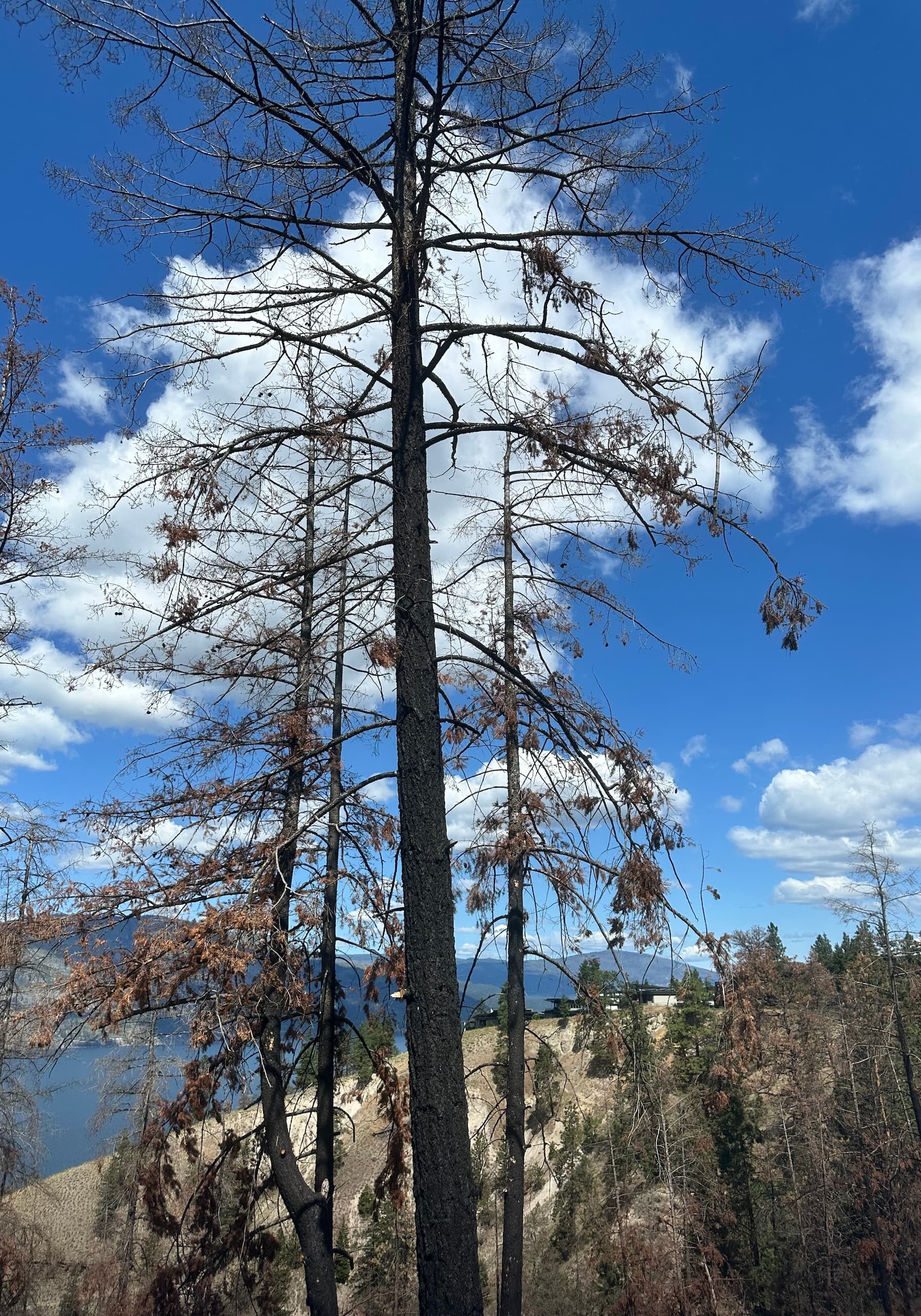
In wooded properties, storm cleanup can also overlap with Wildfire Mitigation Tree Services, especially in regions where downed woody debris becomes summer fuel. That is an issue many homeowners miss. A winter ice storm may feel like a cold-season problem, but the slash left behind can increase fire intensity months later. Removing broken ladder fuels, reducing snag hazards near structures, and restoring spacing can improve both safety and resilience.
Preventing the next emergency starts long before the forecast
Storm preparedness in tree care is not glamorous, but it is effective. Trees that receive periodic structural pruning when young generally fail less catastrophically than trees left to develop codominant stems, overlong laterals, or dense unbalanced crowns. Species selection matters. Planting depth matters. Root space matters. So does the willingness to remove a poor tree before it becomes an urgent one.
The properties that fare best after severe weather usually have a few things in common:
| Practice | Why it helps after storms | |---|---| | early structural pruning | reduces weak unions and poor branch architecture | | routine inspections | catches decay, root issues, and deadwood before weather exploits them | | appropriate species selection | lowers failure risk in site-specific wind, ice, or snow conditions | | timely removals | prevents known weak trees from becoming emergency hazards | | debris and fuel management | improves access and may support wildfire mitigation later |
None of these measures eliminate risk. A healthy tree can still fail in extraordinary weather. But there is a major difference between storm damage you could not reasonably prevent and storm damage that was waiting to happen.
A note on urgency and restraint
The best emergency crews work fast without acting rushed. That distinction matters. Speed helps when a driveway is blocked, a roof is loaded, or a cracked stem is hanging over a play area. Restraint helps when the wrong cut could destabilize a partially failed trunk, damage a salvageable tree, or put workers in the drop zone of a hidden hanger.
Homeowners under stress often want certainty on the spot. Sometimes certainty is available. A fully uprooted spruce on the garage is coming off and coming down. Other times, the wisest answer is conditional: this tree can probably be retained if the root plate is stable after unloading, if the crack does not run past the union, and if follow-up pruning and support hardware are acceptable to you. That kind of answer may sound less satisfying, but it is usually the sign of honest expertise.
Storms compress decision-making. They force choices about safety, cost, landscape value, and long-term risk into a very short time frame. Good Emergency Tree Services create order in that chaos. They make the site safe, preserve what is truly worth preserving, and remove what has become unsafe beyond repair.
When the weather clears, that work should leave more than a tidy yard. It should leave a property with fewer hidden hazards, clearer priorities, and a better plan for the next season that tests every tree in it.
Name: Ace Tree Services Ltd.
Address: 4656 Wallace Hill Rd, Kelowna, BC V1W 4C2, Canada
Phone: 250-212-9593
Website: https://acetree.ca/
Email: [email protected]
Hours:
Sunday: Closed
Monday: 7:00 AM–5:00 PM
Tuesday: 7:00 AM–5:00 PM
Wednesday: 7:00 AM–5:00 PM
Thursday: 7:00 AM–5:00 PM
Friday: 7:00 AM–5:00 PM
Saturday: 7:00 AM–5:00 PM
Time zone: Pacific Time
Open-location code / Plus code: RHF8+8G Kelowna, British Columbia, Canada
Map/listing URL: https://www.google.com/maps/search/?api=1&query=Google&query_place_id=ChIJxRVIBx2LfVMRNRSkp6-IC0U
Embed iframe:
Socials:
https://www.facebook.com/p/Ace-Tree-Services-61585901931447/
Ace Tree Services Ltd. provides professional tree care from its Kelowna location on Wallace Hill Road.
The official website lists tree removal, stump removal and grinding, tree pruning and crown shaping, emergency tree services, certified arborist consultation, dangerous tree assessment and removal, tree cabling and bracing, and wildfire mitigation.
Ace Tree Services serves homeowners, businesses, and property owners in Kelowna and throughout the Okanagan Valley.
The company’s official site highlights ISA Certified Arborist support, local Okanagan experience, and fully insured tree service work.
Customers can contact Ace Tree Services for planned tree maintenance, high-risk removals, storm-related tree concerns, pruning, stump grinding, and arborist consultation needs.
The supplied public listing address is 4656 Wallace Hill Rd, Kelowna, BC V1W 4C2, near rural and residential service areas in southeast Kelowna.
For tree services in Kelowna and the Okanagan, call 250-212-9593, email [email protected], or visit https://acetree.ca/
The public map listing uses plus code RHF8+8G Kelowna, British Columbia, Canada and can help customers find Ace Tree Services Ltd. near Wallace Hill Road.
Popular Questions About Ace Tree Services Ltd.
What does Ace Tree Services Ltd. do?
Ace Tree Services Ltd. provides tree removal, stump removal and grinding, tree pruning and crown shaping, emergency tree service, certified arborist consultation, dangerous tree assessment and removal, tree cabling and bracing, and wildfire mitigation.
Where is Ace Tree Services Ltd. located?
Ace Tree Services Ltd. is listed at 4656 Wallace Hill Rd, Kelowna, BC V1W 4C2, Canada.
What phone number should customers call?
Customers can call Ace Tree Services Ltd. at 250-212-9593.
What is the email address for Ace Tree Services Ltd.?
The supplied email address is [email protected].
What are Ace Tree Services Ltd.’s hours?
The supplied listing hours show Monday through Saturday from 7:00 AM to 5:00 PM, with Sunday closed, Pacific Time. The official website lists 7:00 AM to 5:00 PM, Monday through Friday, so customers should confirm Saturday availability before booking.
Does Ace Tree Services Ltd. provide emergency tree service?
Yes. The official website lists emergency tree services, including emergency tree removal, dangerous tree assessment, emergency stabilization, and limb or branch cleanup.
Does Ace Tree Services Ltd. offer arborist consultations?
Yes. The official services page lists certified arborist consultation as one of the company’s Okanagan tree services.
Does Ace Tree Services Ltd. provide stump grinding?
Yes. The official services page lists stump removal and grinding as a service.
What areas does Ace Tree Services Ltd. serve?
The official website states that Ace Tree Services serves Kelowna and the Okanagan Valley.
How do I contact Ace Tree Services Ltd.?
Call 250-212-9593, email [email protected], visit https://acetree.ca/, or use the listed social profile: Facebook.
Landmarks Near Kelowna, BC
Wallace Hill Road: The road listed for Ace Tree Services Ltd. and a practical reference point for the company’s Kelowna location.
East Kelowna: A nearby rural and residential area where tree maintenance, pruning, removals, and wildfire mitigation can be important for property owners.
Myra-Bellevue Provincial Park: A major outdoor landmark southeast of Kelowna and a useful reference for the surrounding hillside and forested areas.
Gallagher’s Canyon: A nearby Kelowna community with residential properties, mature trees, and landscape maintenance needs.
Kettle Valley: A southeast Kelowna neighborhood with homes, parks, and landscaped properties.
Mission Creek Greenway: A well-known natural corridor in Kelowna and a local reference point for tree-lined recreation areas.
Orchard Park Shopping Centre: A major Kelowna retail landmark and citywide reference point.
Downtown Kelowna: A central business and residential district within Ace Tree Services’ broader Kelowna service area.
Okanagan Lake: A major regional landmark running through Kelowna and the surrounding Okanagan Valley.
Mission Creek Regional Park: A recognizable Kelowna park and natural landmark with extensive trees and trails.
Rutland: A large Kelowna community with residential and commercial properties that may need tree service support.
Glenmore: A Kelowna neighborhood with homes, parks, and established trees.
Lower Mission: A residential and lake-adjacent Kelowna area where pruning, tree health, and property safety can matter for homeowners.
Kelowna International Airport: A major transportation landmark north of central Kelowna.
West Kelowna: A nearby Okanagan community across the lake and a practical regional service reference.
For tree removal, stump grinding, pruning, crown shaping, emergency tree service, arborist consultation, dangerous tree assessment, cabling and bracing, or wildfire mitigation near these Kelowna and Okanagan landmarks, contact Ace Tree Services Ltd. at 250-212-9593, email [email protected], or visit https://acetree.ca/